
Yunnan Through My Leica: Ten Days from Dali to Shangri-La
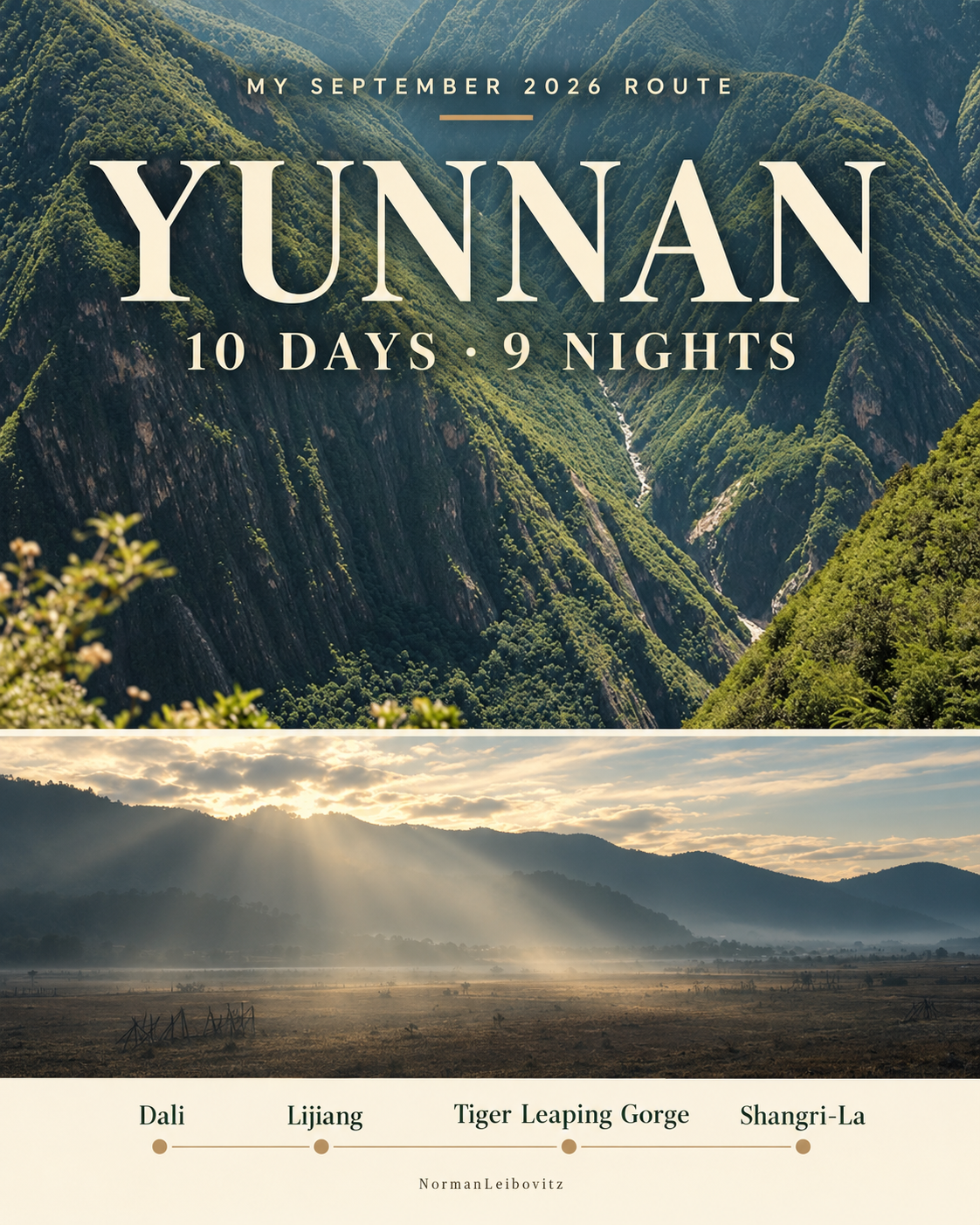
I came home from China with almost 3,000 photographs. Looking through the Yunnan frames, I keep returning to the contrasts: the broad water of Erhai, Lijiang's close-set rooftops, the sheer walls of Tiger Leaping Gorge and the open country around Shangri-La. The route had a shape of its own, but the photographs live in the moments between the stops.
From 18 to 27 September 2026, I travelled from Singapore through Kunming to Dali, then north to Lijiang, Tiger Leaping Gorge and Shangri-La. Nine nights gave the journey its rhythm: one in Dali, three in Lijiang, two in the gorge and three around Shangri-La. My overnight flight brought me back to Singapore on 28 September.

Dali: a first pause beside Erhai
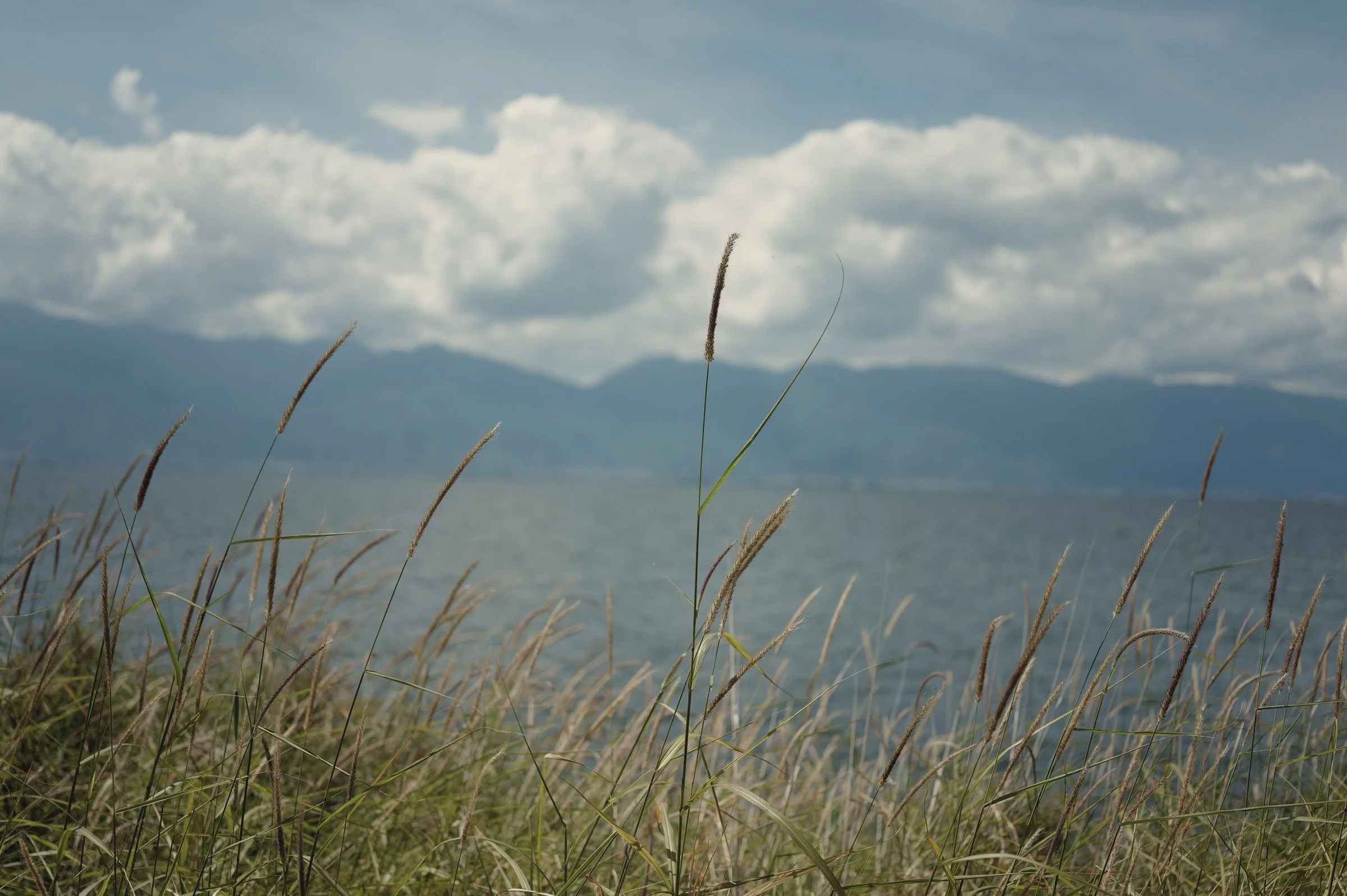
The trip began with an overnight flight to Kunming and a morning train to Dali. By the afternoon, I was beside Erhai, watching cloud shadows change the water and the mountains beyond it. After the movement of airports and stations, that wide horizon felt like an exhale.
My first night was at SALO Sea View Cave Vacation Home. The lake-facing setting gave the arrival day a quiet centre. In the photographs, the shore, grasses and pale sky matter as much as the buildings. Dali was a short opening chapter on this journey; it left me wanting more time by the water.

Lijiang: rooftops, canals and the mountain
On 19 September, I took the train from Dali to Lijiang and settled into Yijian Yunkuan · Beyond Streams & Hills near Sifang Street for three nights. I liked having a base I could return to, with the town unfolding beyond the room rather than another suitcase waiting to be packed.
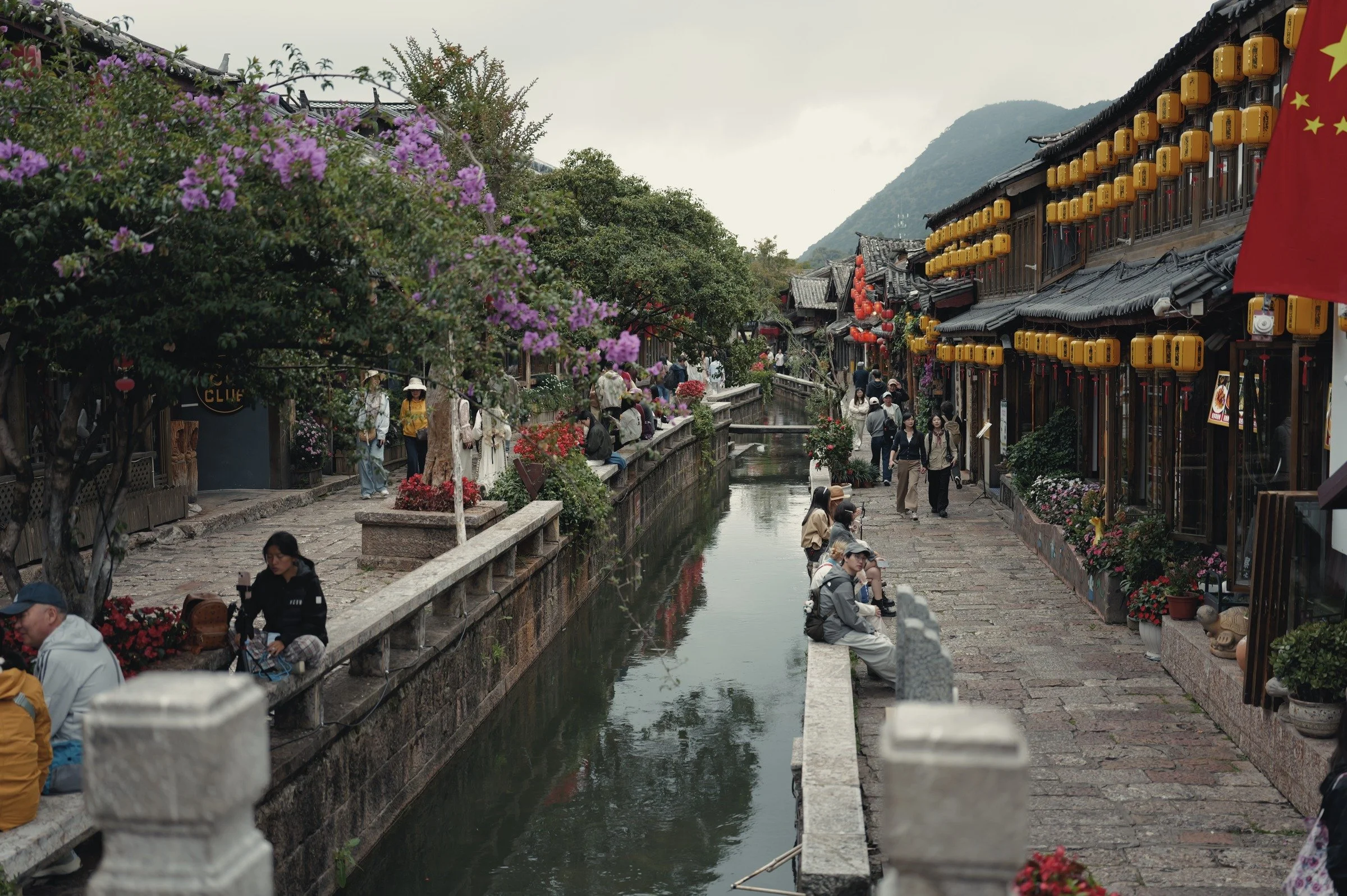
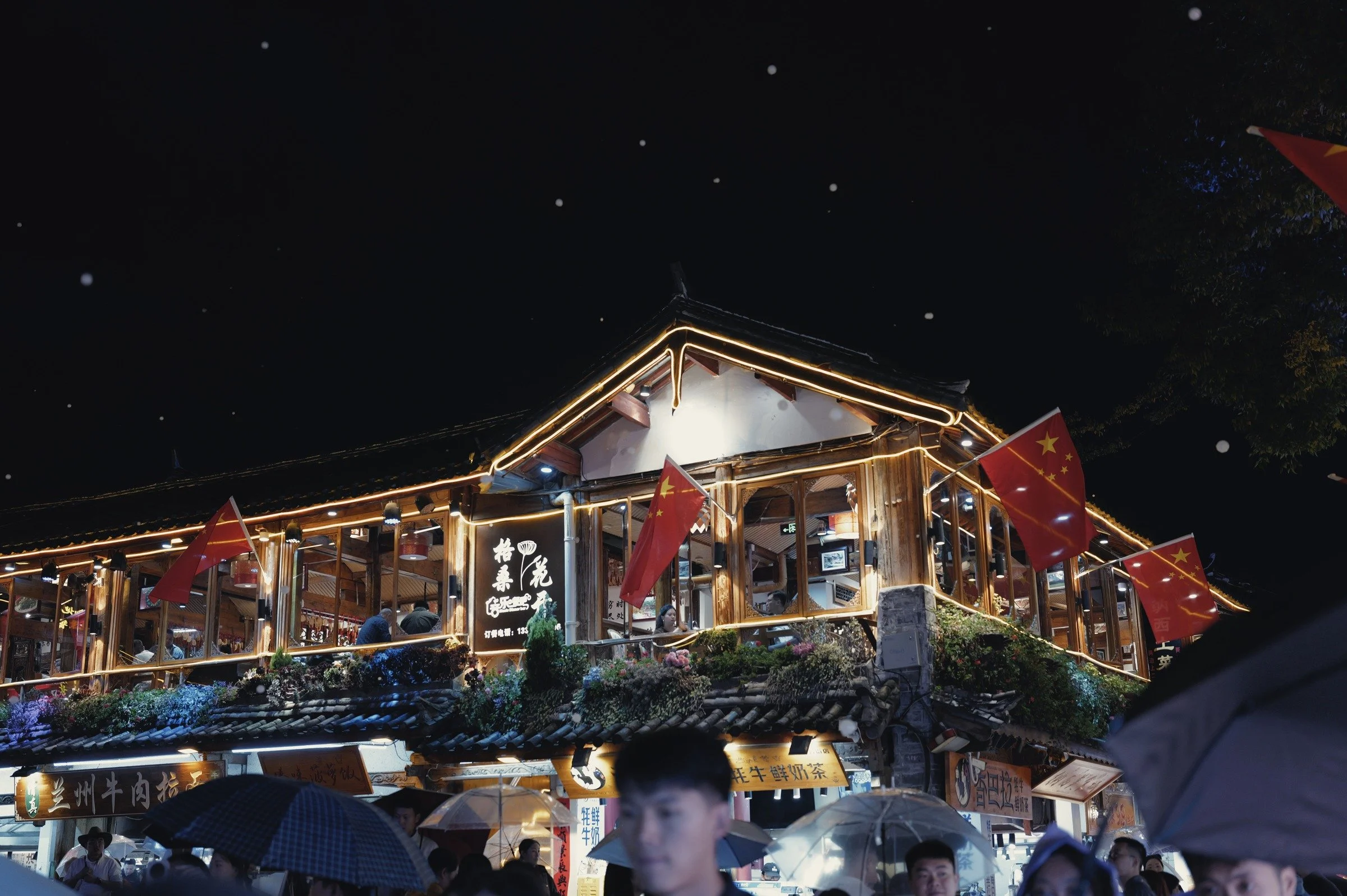
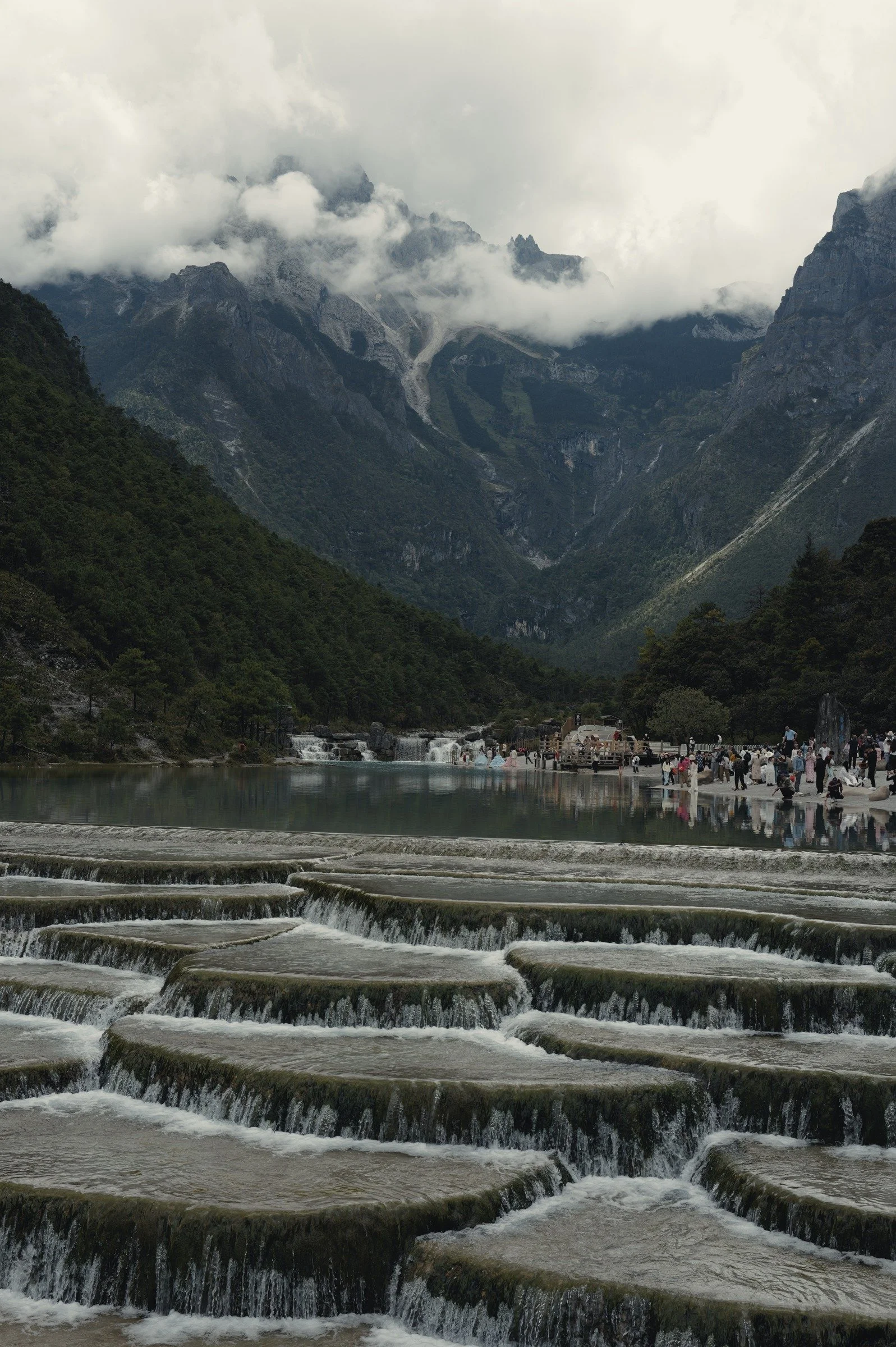
Lijiang offered a different scale from Dali. I photographed tiled roofs stacked against one another, people moving along the canals and shopfronts that changed character as the lights came on. A wider frame explained the street; a few steps closer, a railing, a doorway or a reflection became the picture.
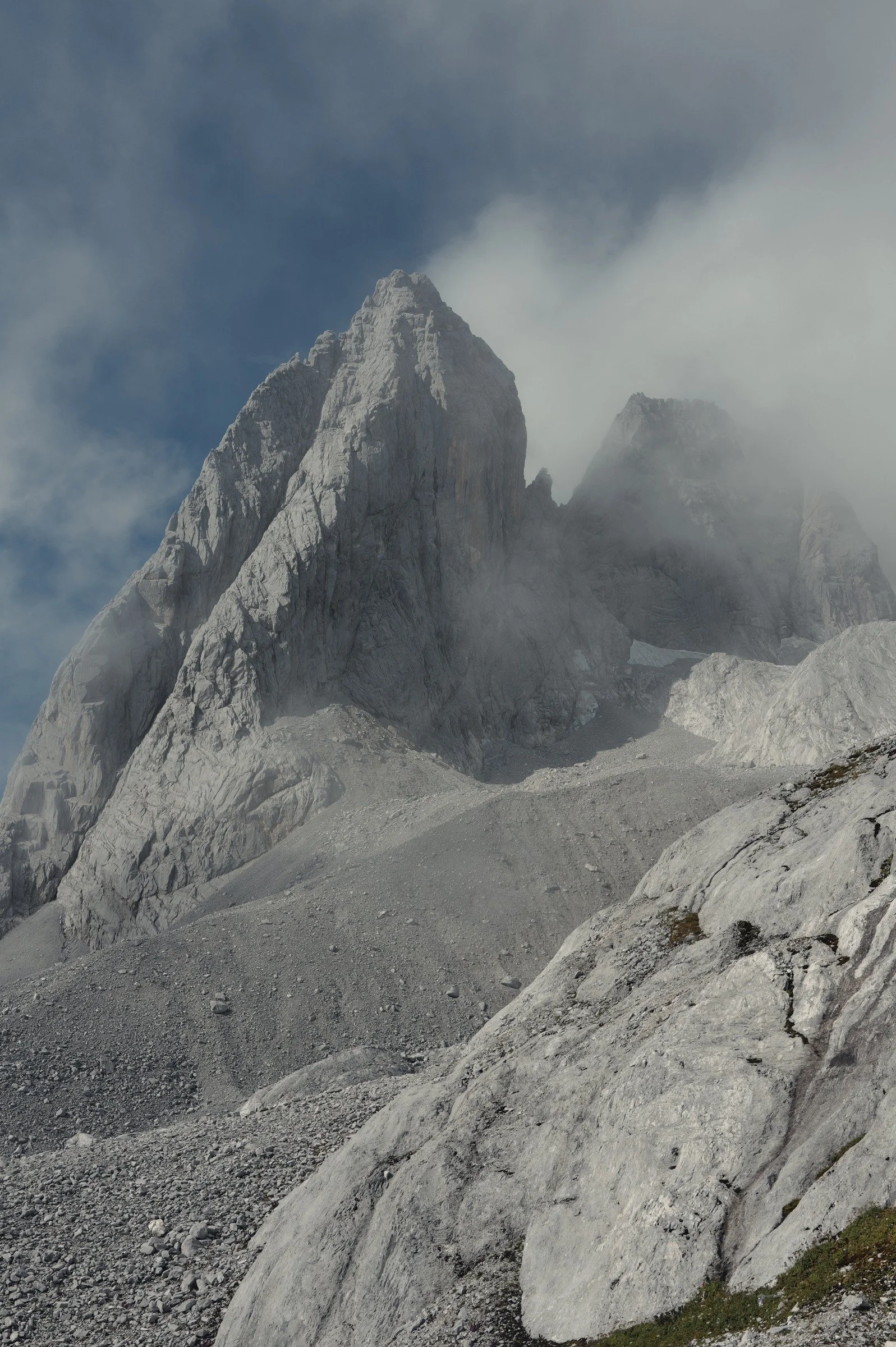
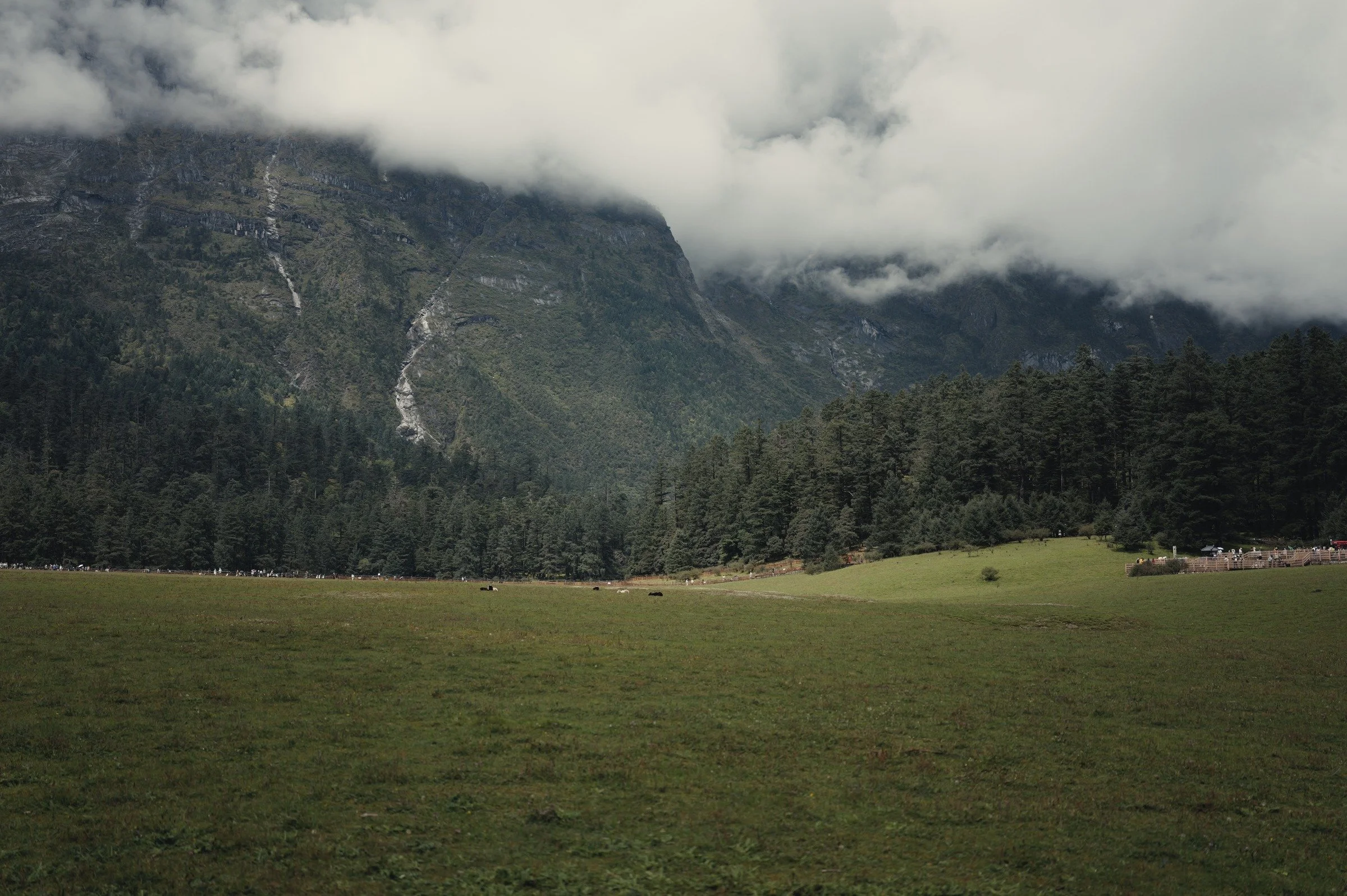
The slower day on 20 September belonged to the town. The next day brought Yulong Snow Mountain: grey rock, drifting cloud, green meadows and the pale water below. The sequence in my album moves from open mountain views back into the streets. That return to everyday life is part of what makes the mountain photographs feel grounded.
For me, the three-night stay was the right counterweight to the more demanding days ahead. I could follow the light without making every walk a transfer.
Tiger Leaping Gorge: two nights inside the landscape
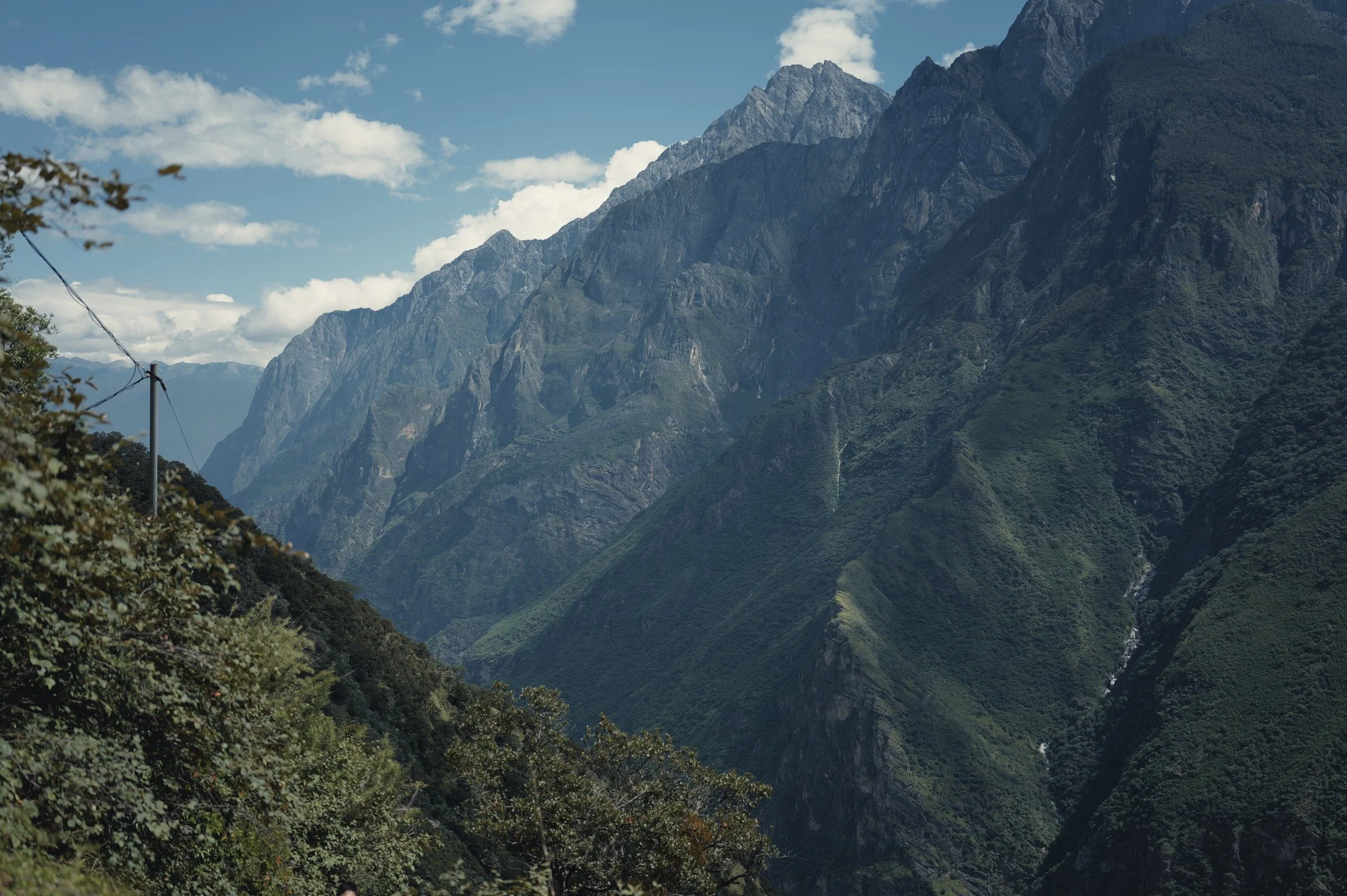
On 22 September, the journey moved into Tiger Leaping Gorge. This was the chapter where the distance between the photograph and the effort of making it became especially clear: walking, stopping, looking across the valley, then shouldering the bag again.
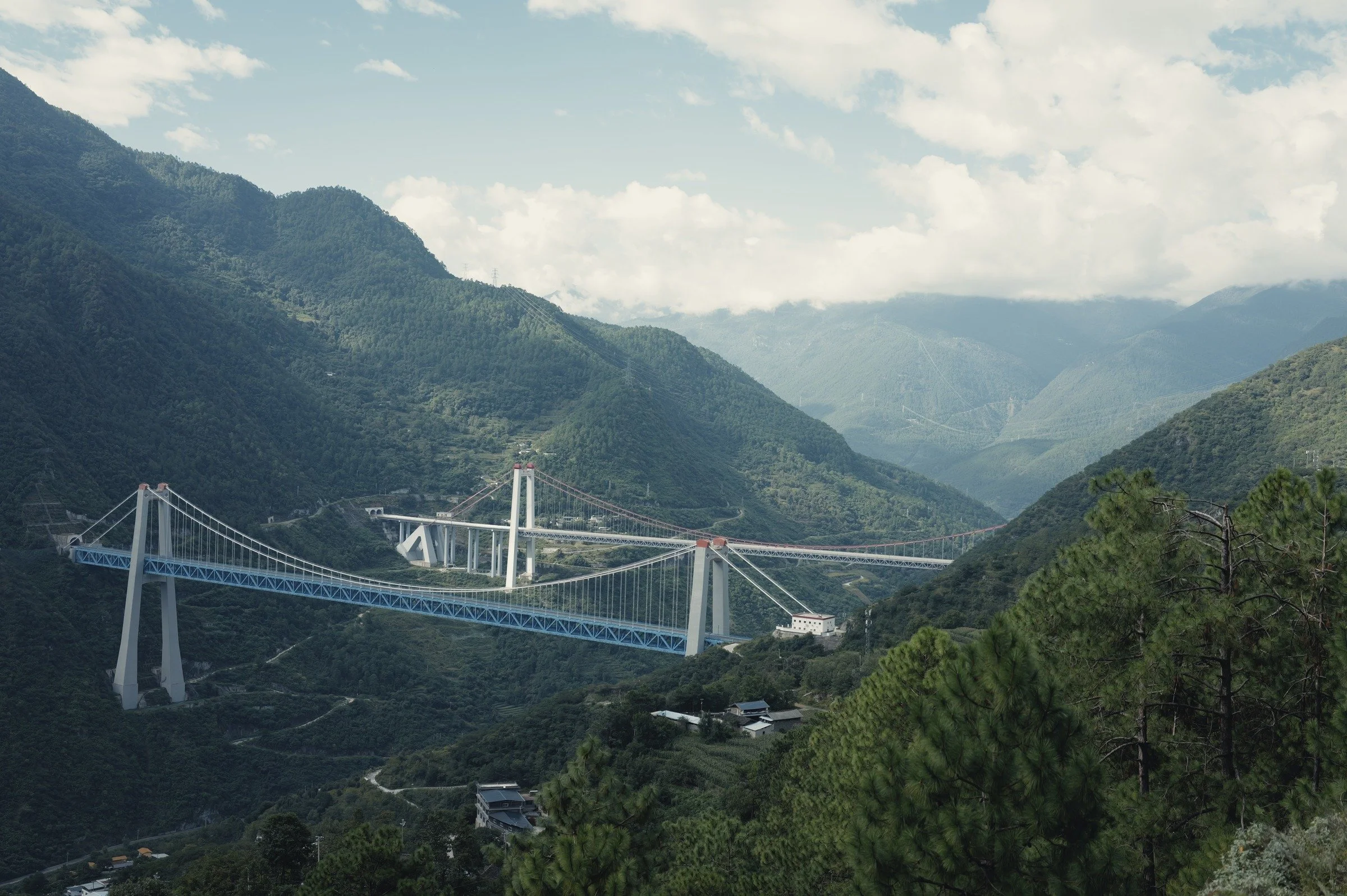
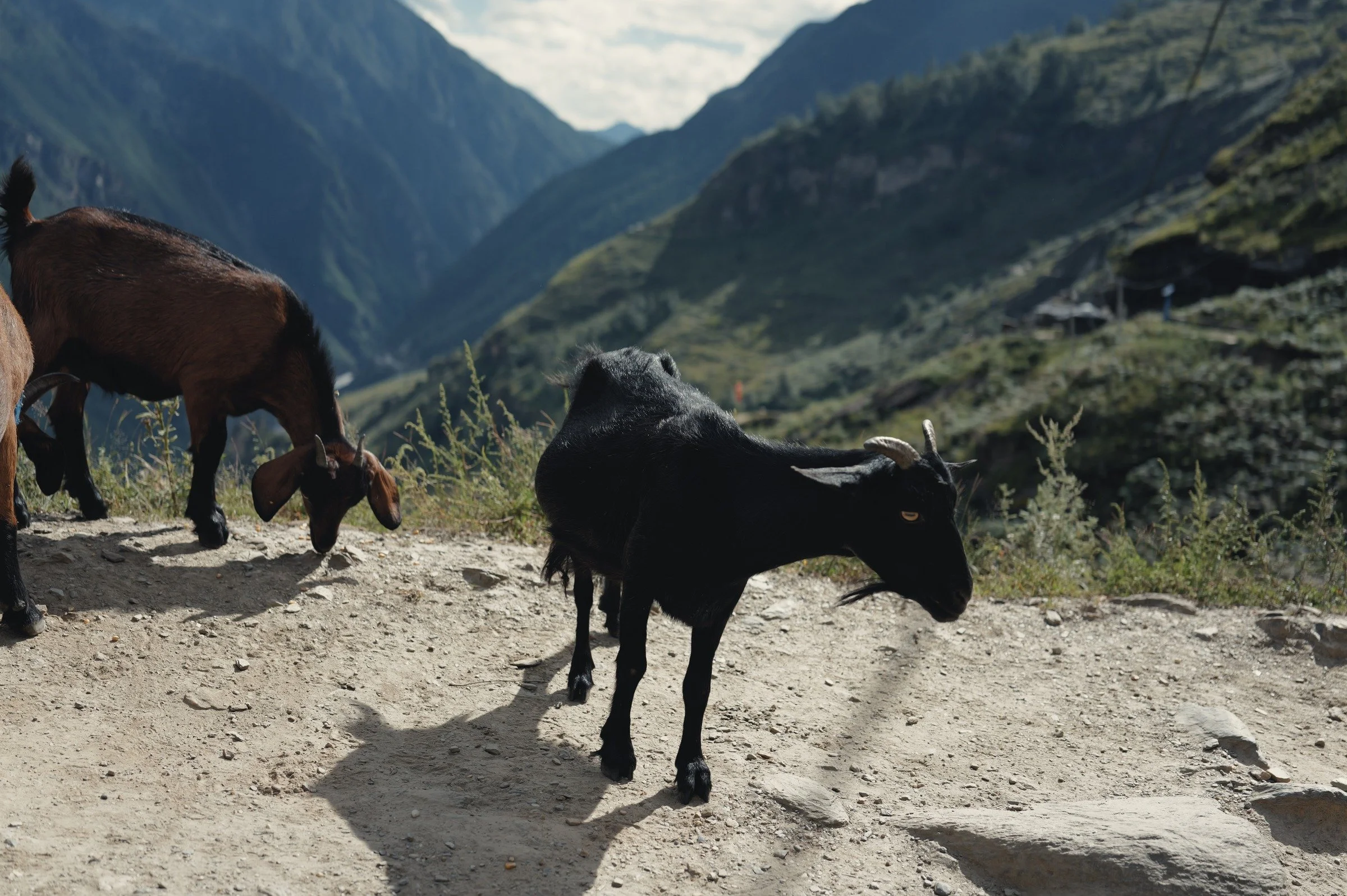
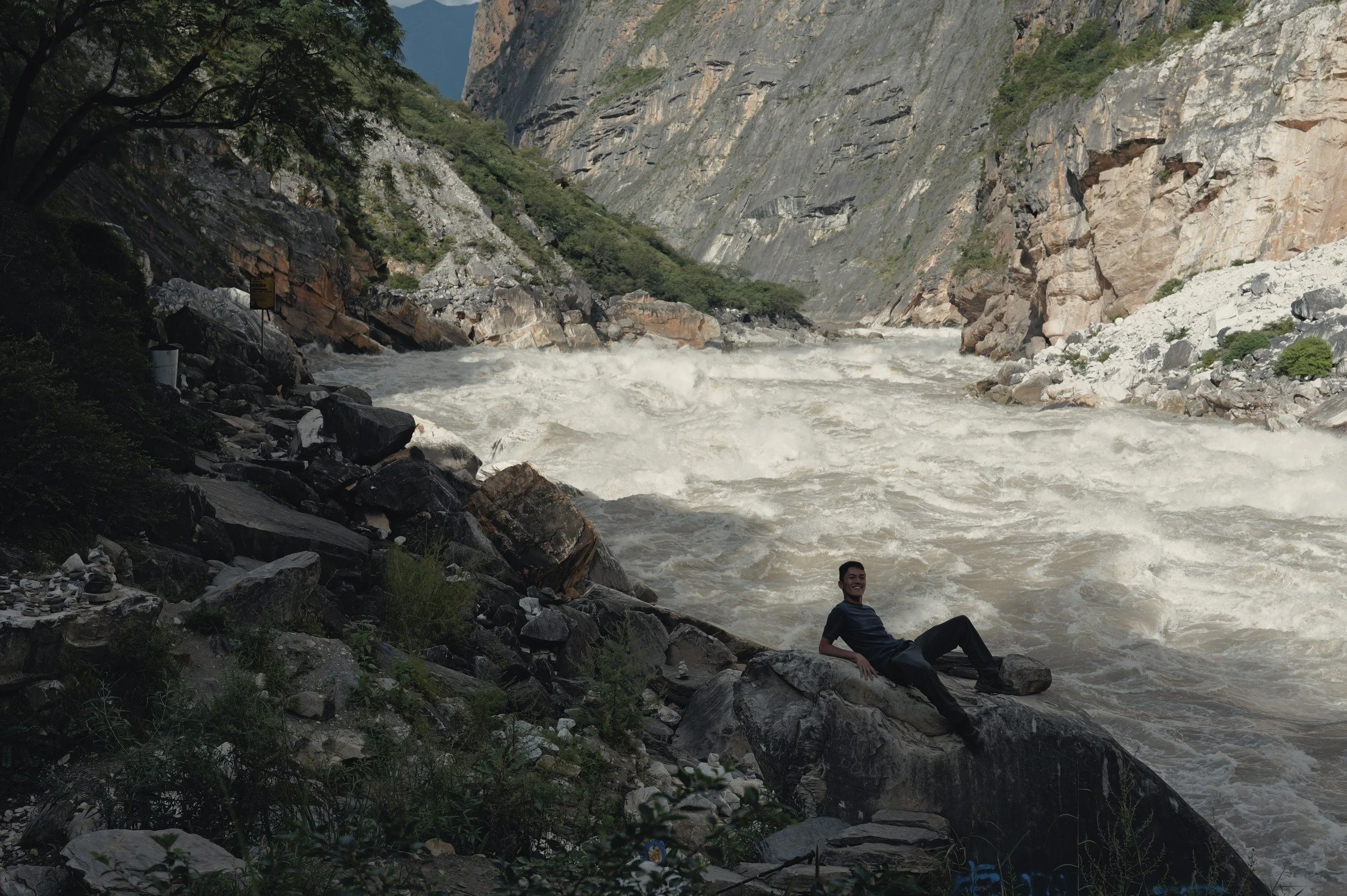
The gorge photographs are full of scale. A bridge stretches across the valley; a person on the trail becomes a small mark against a mountain wall. Horses pass along the path. The changing light reveals folds in the slopes that disappear again under cloud. I kept alternating between the whole landscape and the details that gave it a human measure.
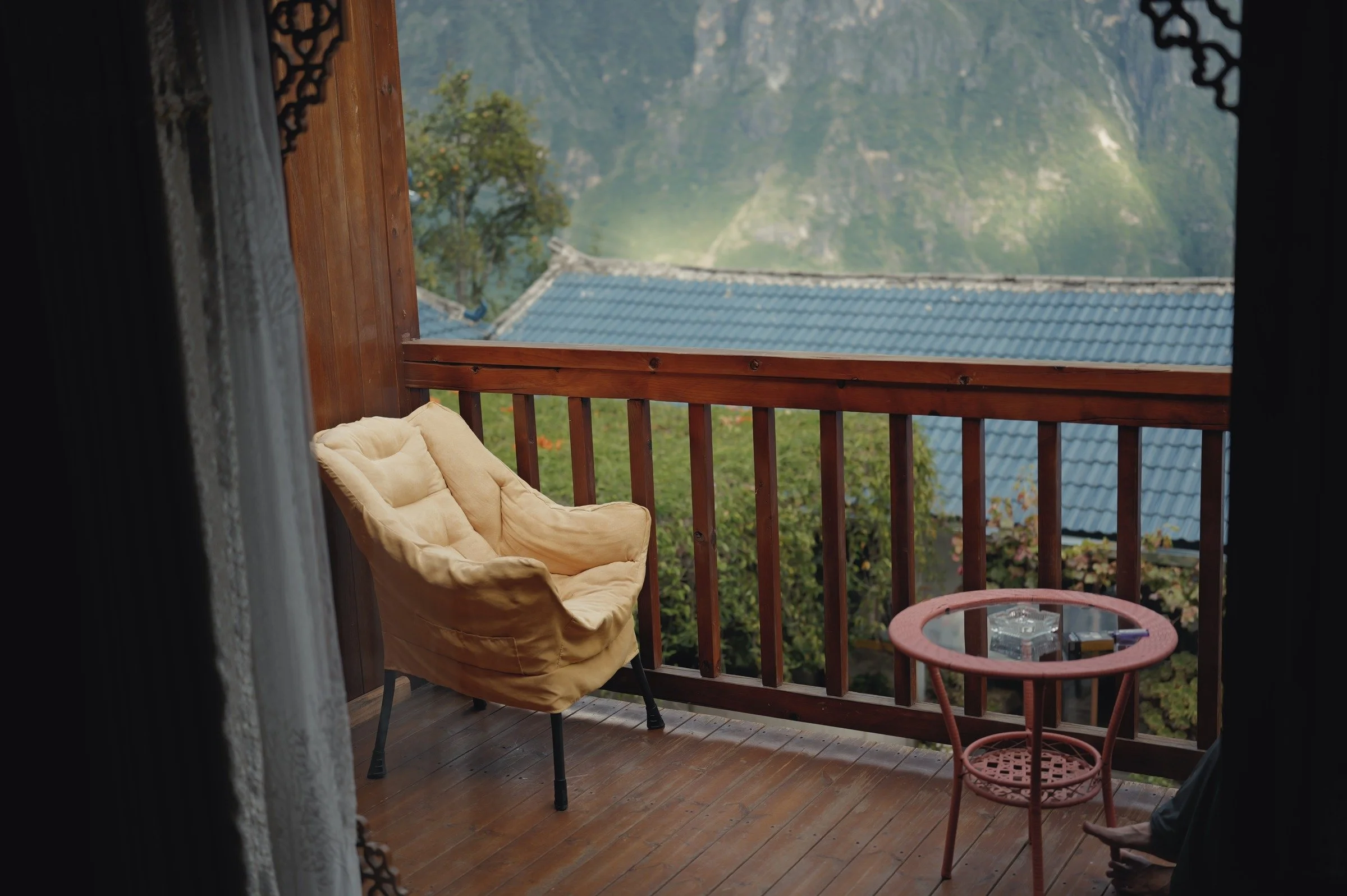
I stayed first at Qifengshan Homestay, then at MoYe · Snow Mountain Cliff Hotel. Qifengshan brought warmth and a sense of being welcomed into a home. The house-cured pork cooked over charcoal remains one of the meals I remember most clearly from the trip. The balcony and the mountain view made the pause after walking feel earned.
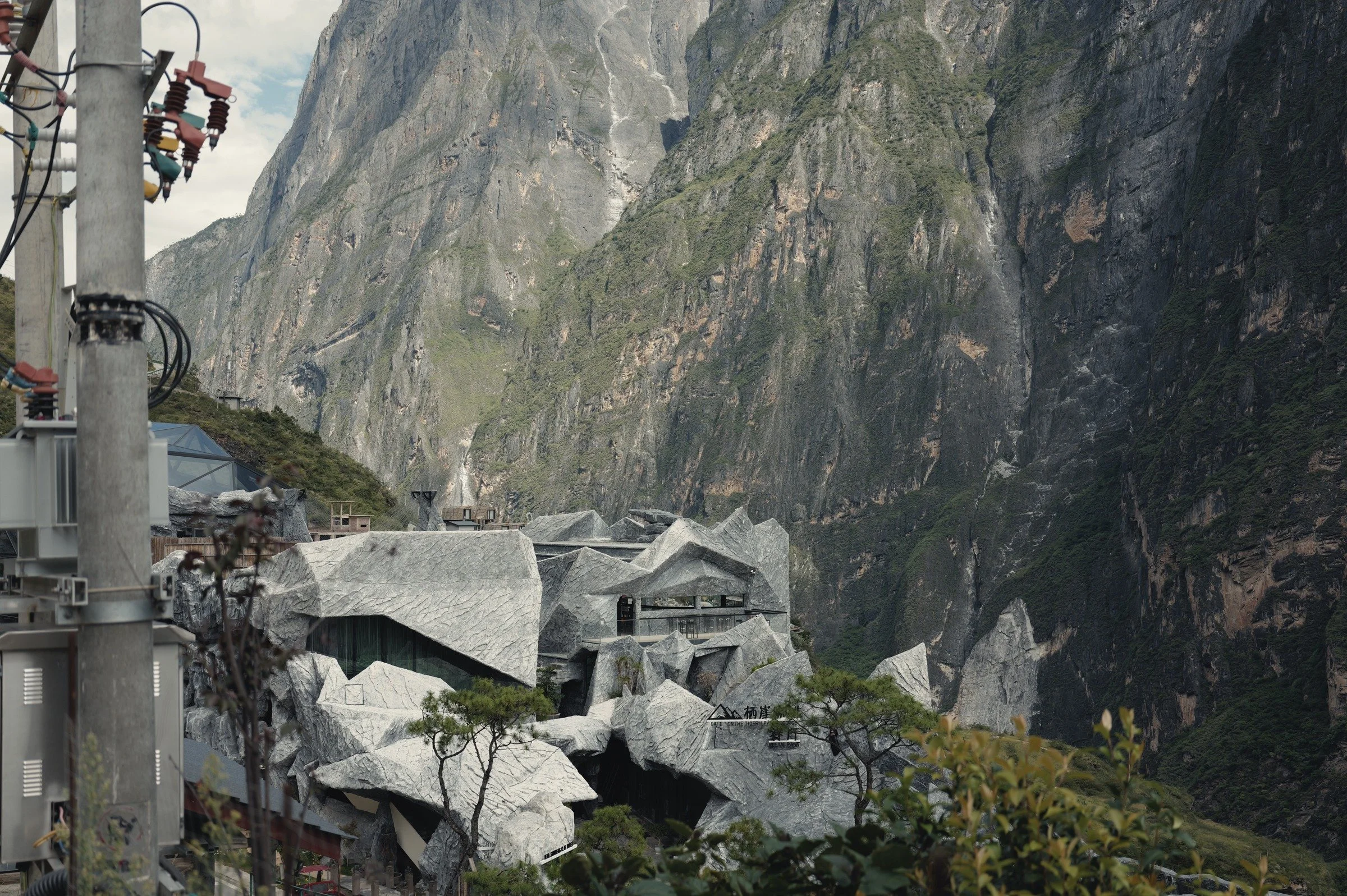
MoYe had a different character: sculptural architecture, stone textures and a café facing the mountain wall. After the trail, the building became another subject. My photographs move between the cliffside setting, the interiors and the river below rather than treating the hotel as separate from the gorge.
Travelling with a daypack while my main luggage went ahead made a real difference. The walk beyond Halfway was one of my favourite sections. My fuller trail account is in The Tiger Leaping Gorge Cheat Sheet, and I wrote separately about the welcome and the stay in Floating Between the Clouds and the Chasm: My Stay at Qi Feng Shan Homestay. These photographs sit alongside those stories rather than replacing them.
Shangri-La: old-town colour, then open sky
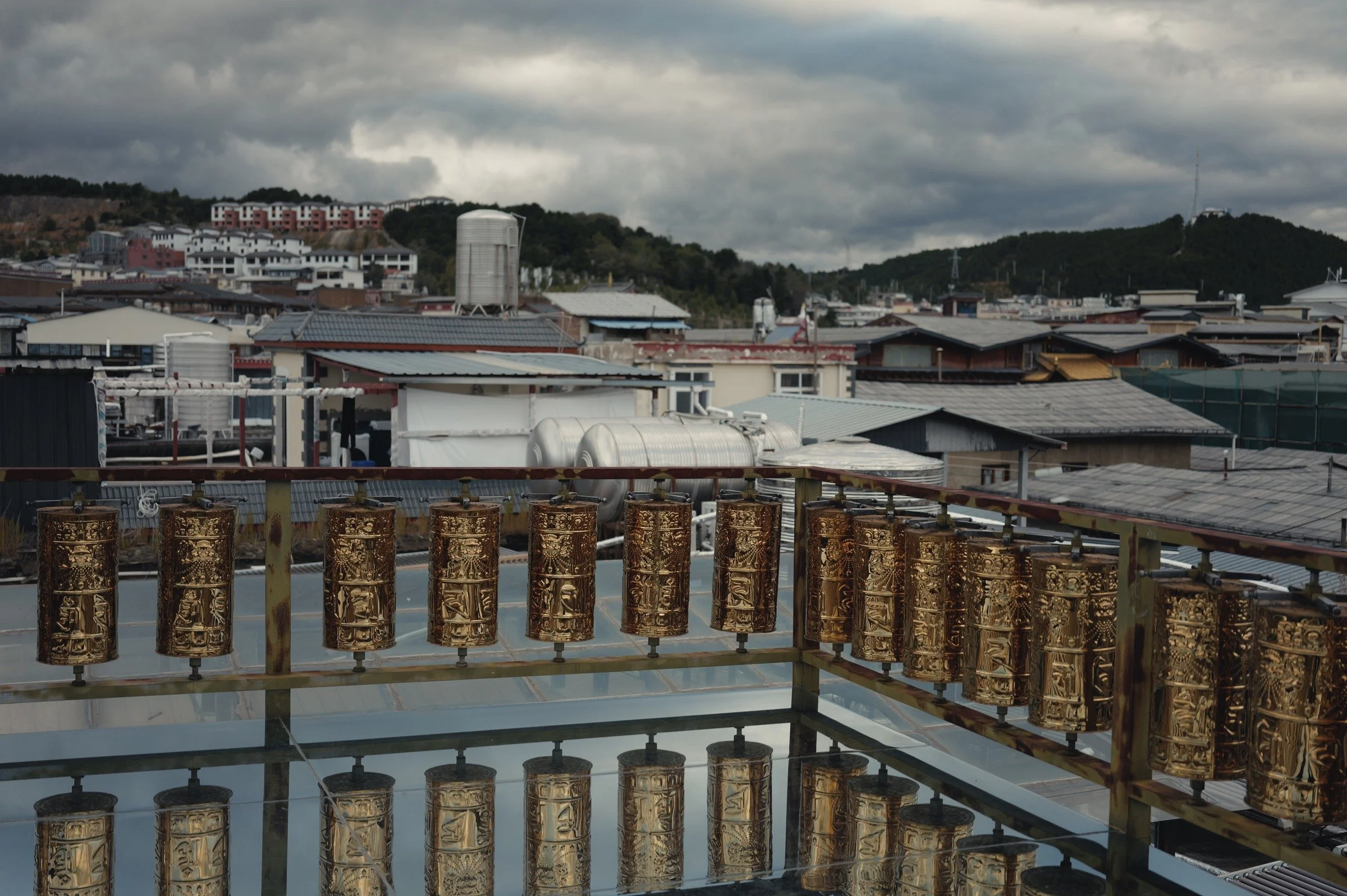
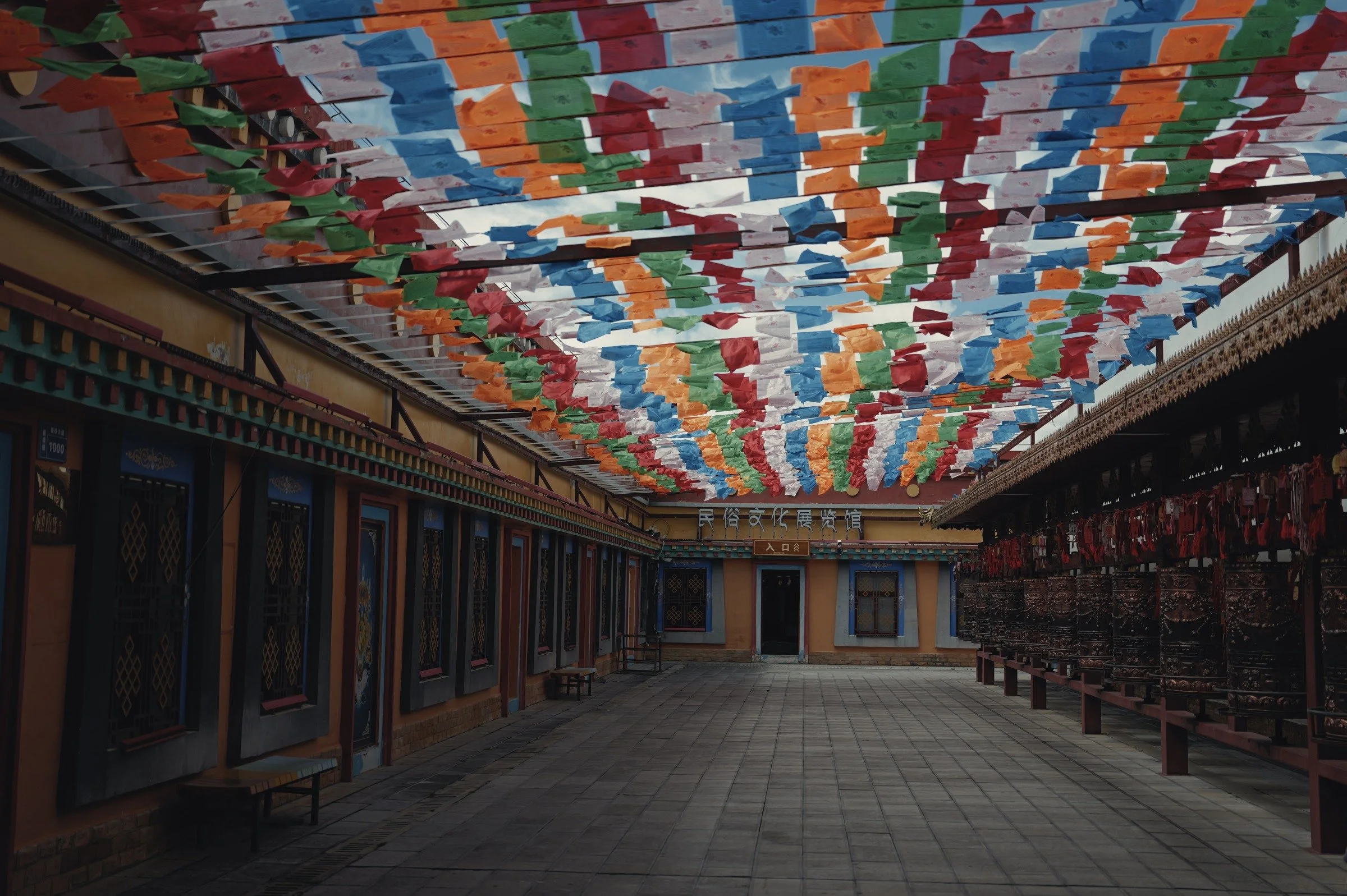
On 24 September, I continued to Shangri-La and stayed for two nights at Passing-cloud Resort · Gaogongfu in Dukezong Ancient Town. The shift was immediate: timber, painted details, prayer flags and streets that rewarded a slower look after the drama of the gorge.
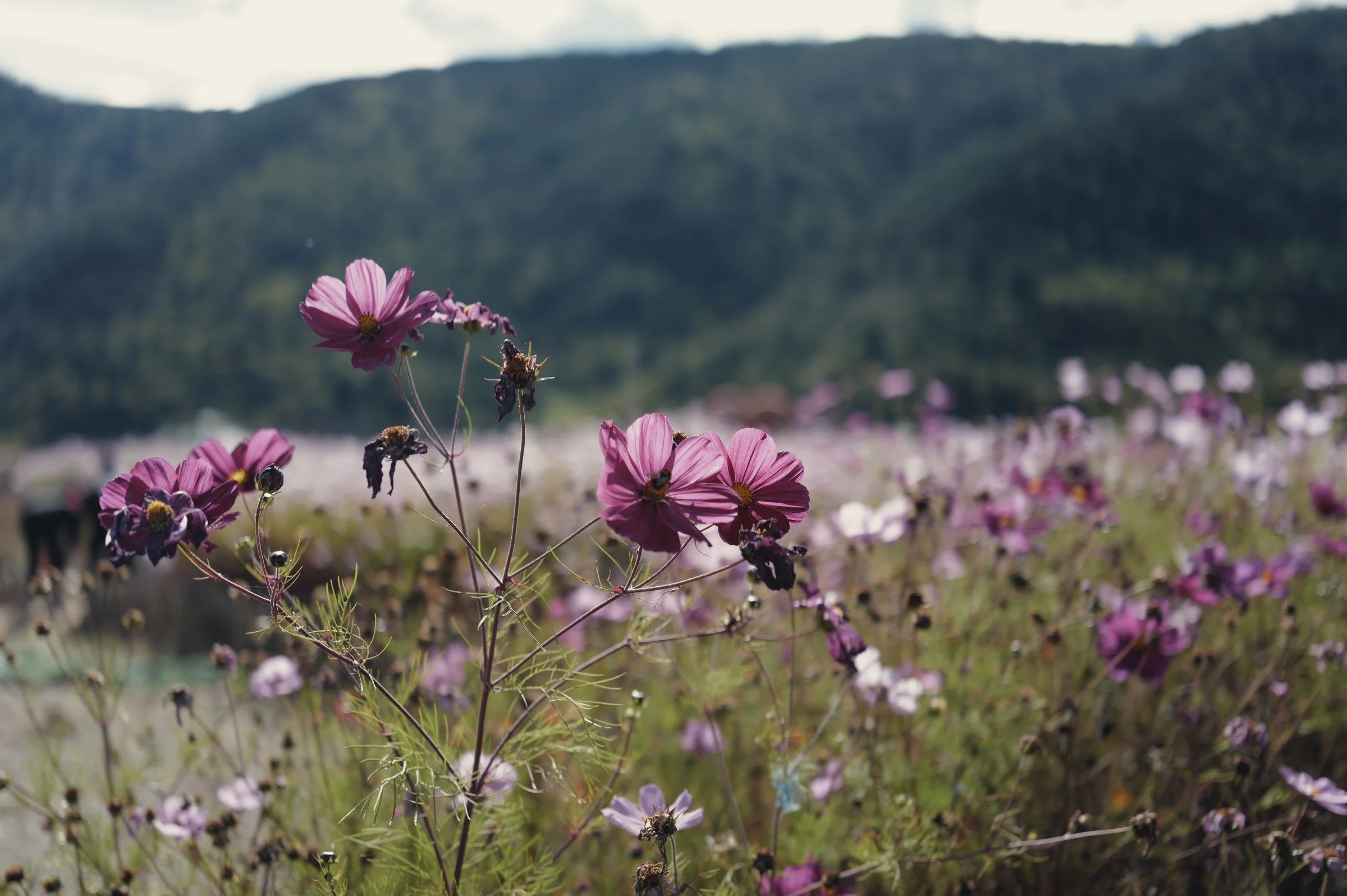
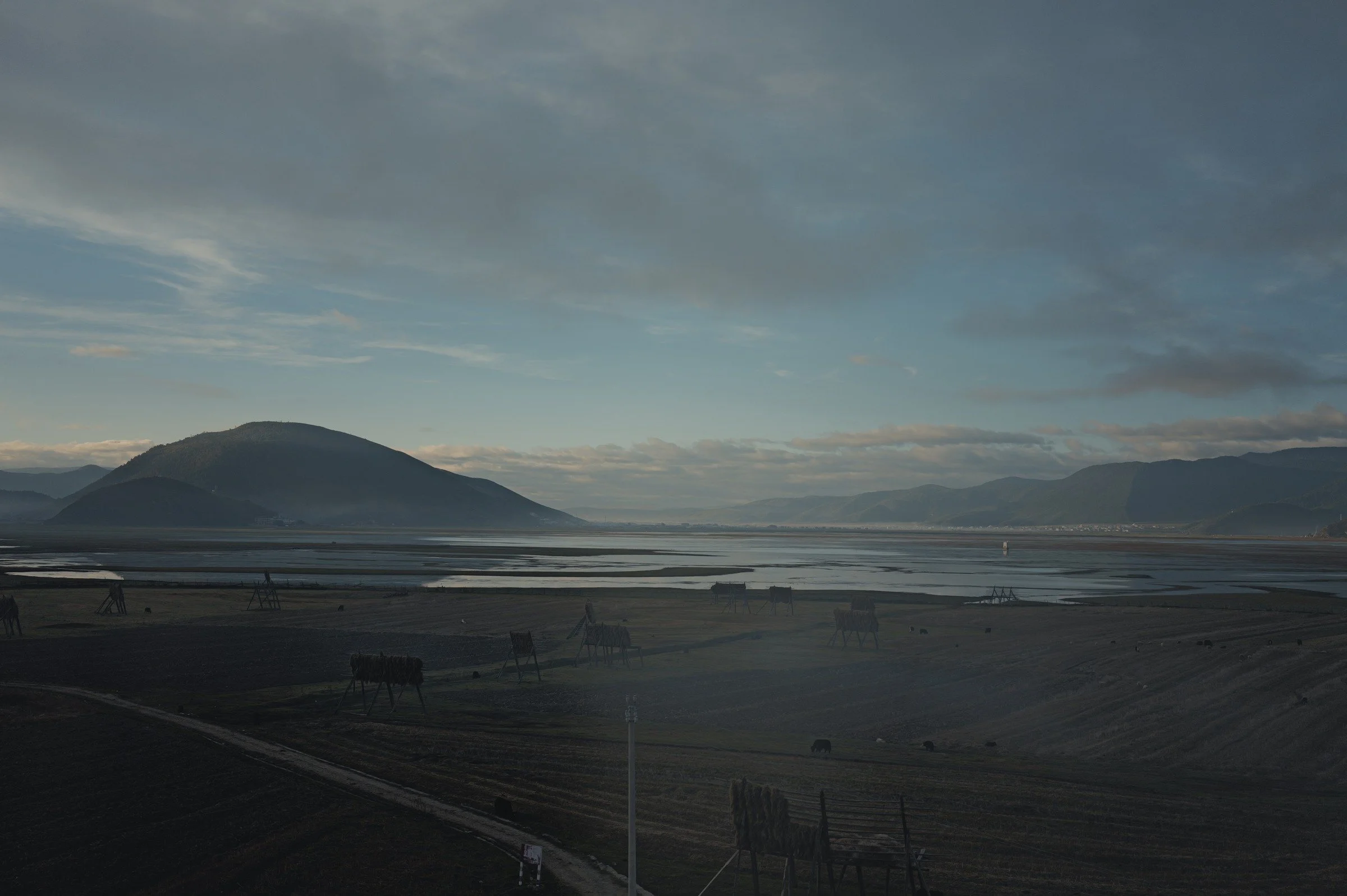
The album brings together rooftops under a restless sky, colourful courtyards and the open landscape beyond town. I am drawn to the way a small detail can lead into a much larger scene: a line of flags, a flower against a hillside, a road disappearing beside the grassland. I let those photographs carry the Shangri-La chapter instead of turning it into a checklist.
Napa Lake: the quiet final night
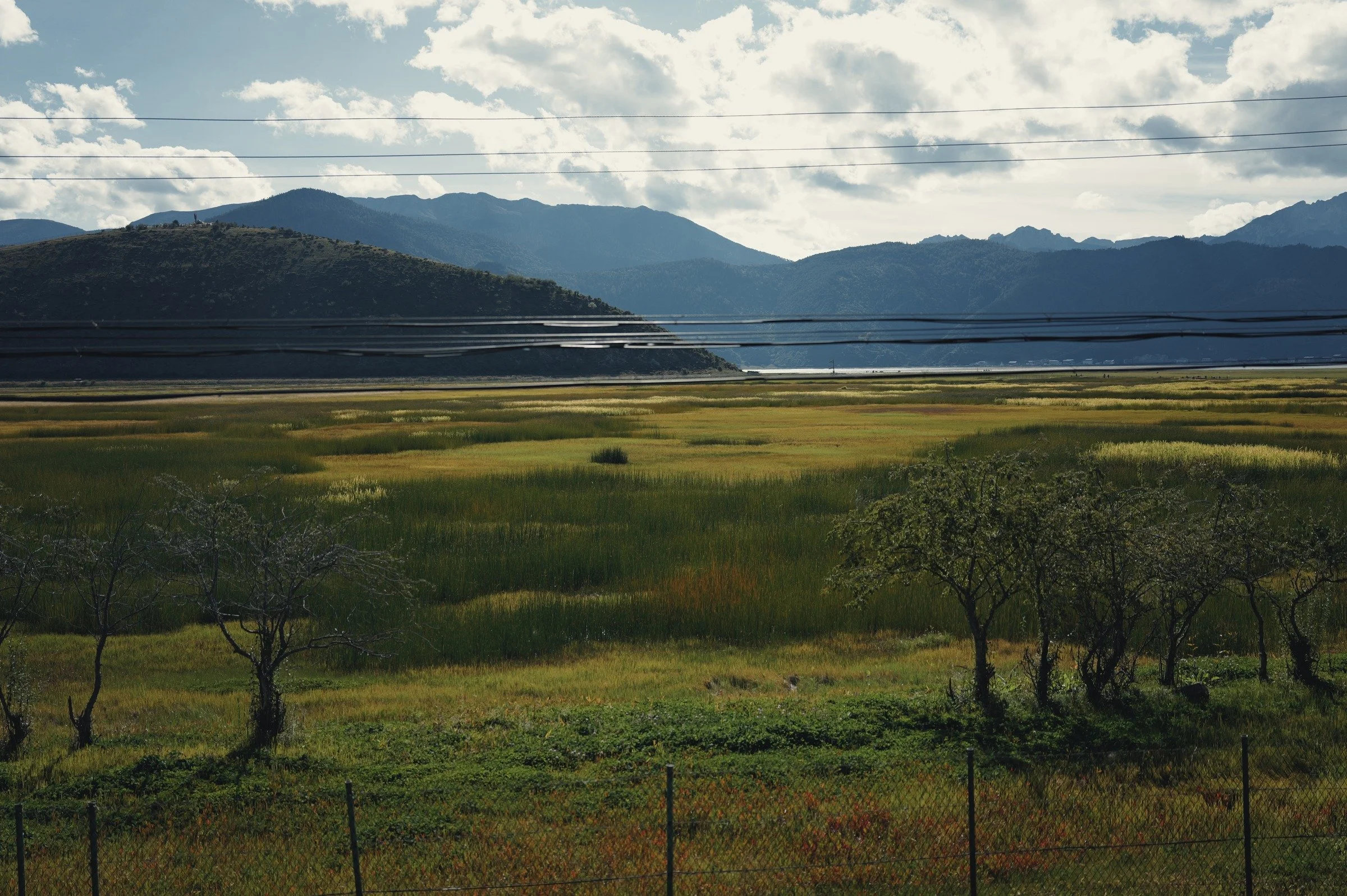
For the last night, on 26 September, I moved to Shangri-La Yanwai · Boundless Wild | THE HORIZON and its Wu Yin 270° view room. The view opened out across grassland, seasonal water and the mountain ridge. After the close streets and steep gorge walls, I found myself making quieter pictures again.
That setting came with distance from the conveniences of town. Meals and transport needed more thought than they had in Dukezong. For this journey, the split worked: two nights with the old town close at hand, then one night with the horizon taking over.
The final frames are less about arrival than about staying still long enough to notice the light. The lake and grasslands change with the season; these are my September photographs, a record of how the place looked during my visit.
Home via Kunming
On 27 September, I took the train from Shangri-La back to Kunming, then flew home overnight. I reached Singapore at 01:30 on 28 September. The nine-night journey was over, but the work of looking through the photographs had only begun.
The route I travelled
18 Sep: Singapore → Kunming → Dali; one night at SALO.
19–21 Sep: Lijiang; three nights at Yijian Yunkuan, with Yulong Snow Mountain on 21 Sep.
22 Sep: Tiger Leaping Gorge; Qifengshan Homestay.
23 Sep: Tiger Leaping Gorge; MoYe · Snow Mountain Cliff Hotel.
24–25 Sep: Dukezong, Shangri-La; two nights at Passing-cloud Resort.
26 Sep: Napa Lake; one night at Yanwai · THE HORIZON.
27 Sep: Shangri-La → Kunming → Singapore; arrival on 28 Sep.
My rail bookings were D8692, Kunming 09:35 → Dali 11:44; C377, Dali 11:47 → Lijiang 14:15; and C640, Shangri-La 10:05 → Kunming 16:03. These are the September 2026 journeys I booked, rather than a current timetable.
China travel notebook: the apps behind the journey
This is a practical reference alongside the photo essay. App screens, payment eligibility and services can vary by account and location; the links below lead to official setup guides.
Alipay and WeChat Pay — the payment essentials
Both support eligible international bank cards for merchant payments in mainland China. The setup starts with an account, a supported card and any identity checks requested in the app. At a shop, payment usually means scanning the merchant's QR code and entering the amount, or showing the app's payment code for the cashier to scan. The merchant name and amount are worth checking before authorising. Card-linked merchant payments are different from sending money to a personal account; a working wallet does not mean every mini-program checkout will accept the same card. A second payment option, a physical card and some RMB cash make useful backups. Official payment guide for overseas visitors.
DiDi — booking the right ride
DiDi is available through its app and through entry points in Alipay and WeChat. The basic flow is destination, exact pickup point, car category, fare estimate and confirmation. An old-town gate or station pickup zone can matter more than the hotel pin, especially where cars cannot enter narrow streets. The driver's plate and vehicle details appear after acceptance, and in-app messages offer translation. The phone number's last four digits may be used to confirm the ride. Mountain transfers still need advance arrangements when on-demand cars are scarce. Official DiDi guide.
Meituan — meals, delivery and local offers
Meituan's 外卖 section is for food delivery. After SMS registration, the order needs the correct delivery address, a reachable contact number, menu choices and a supported payment method at checkout. Alipay and WeChat Pay are among the listed payment options; the options shown for the actual order are the ones that matter. A hotel's Chinese address and agreed lobby handover point are more useful than an approximate map pin. For a restaurant deal or experience, the redemption dates, branch, reservation rules and exclusions need checking before purchase. Official Meituan ordering guide.
Dazhong Dianping (大众点评) — finding places to eat
Dianping is useful for restaurant discovery, diner photographs, menus and local reviews. Recent food photographs and the exact branch tell a more complete story than a score alone. The Chinese business name can be copied into a map or shown to a driver. Any voucher needs its own terms checked; finding a place in the app and successfully booking or paying for it are separate steps. Dianping.
AMap / Gaode (高德地图) and Baidu Maps (百度地图) — getting to the actual entrance
AMap Global offers an English interface and routes for walking, driving and public transport. Baidu Maps is another local navigation option. Saving the Chinese name and address as well as the English name makes a useful fallback when search results are ambiguous. A hotel's entrance, a pedestrian-zone gate and a station exit can be different destinations, so the final pin deserves a close look. A downloaded address screenshot is also useful when connectivity drops. Official AMap guide; Baidu Maps.
WeChat, translation and keeping the details handy
WeChat also provides messaging and mini-programs, so hotel conversations and pickup instructions can sit beside the payment tools. A translation app helps with menus and signs. Before a transfer, the useful items to keep together are the booking, Chinese property name, address, contact details and the agreed meeting point. My photographs are the reason I travel; having the practical details in order leaves more attention for making them.
Photographs by Norman Tan / That Leica Boy, made with my Leica Q3 43. The cover is an AI-designed layout based on my travel photographs.